Monday, November 6, 2017

Enjoy the latest issue of Hysteroscopy Newsletter: Nov-Dec 2017


The use of hysteroscopy is increasing throughout the world and is currently considered the gold standard for the diagnosis and treatment of pathologies of the uterine cavity and more recently for some pathologies of the cervix and vagina. Technological progress is opening new horizons for hysteroscopy allowing the gynecologist to perform many surgical procedures safely and effectively in an outpatient setting without significant inconvenience to the patient based on the concept of "see and treat".

Enjoy and update yourself on some interesting topics in Hysteroscopy in this latest newsletter:

Adenomyosis
INTERVIEW WITH... Prof. Mark Hans Emanuel.
CASE REPORT Uterine Malformation
HYSTEROSCOPY Devices -Harpoon
Hysteroscopy Conundrums Is the uterine septum "mostly" avascular?
WHAT'S YOUR DIAGNOSIS?
Brief Review Hysteroscopy complication: false passage
Brief Review: Chronic Endometritis (I)

(Download It and Share it)


Friday, November 3, 2017

ACOG recommends against vaginal seeding in Cesarean births

© Thinkstock

ACOG today issued a policy statement against the practice of vaginal seeding in cesarean deliveries, in absence of sufficient data on potential benefits associated with the procedure.


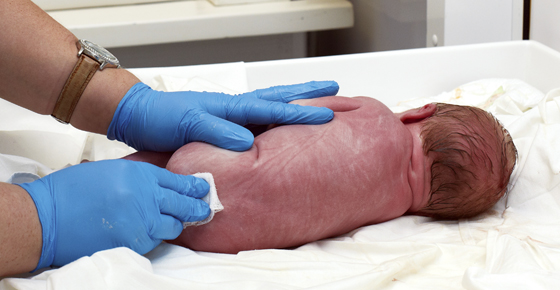
Vaginal seeding is practiced at cesarean birth and consists of transferring maternal vaginal fluid with a gauze or swab to mouth, nose, or skin of a newborn infant to inoculate him with maternal bacteria. 

This practice came into vogue following a dramatic rise in prevalence of childhood asthma, atopic disease, and other immune disorders that paralleled a steep increase in cesarean sections rate worldwide, which prevented the fetal natural colonization with maternal vaginal flora.
At present ACOG only endorse it as a part of research project in institutions under an approved protocol.

If a patient or her attended insist for the procedure, they should be fully informed about the lack of scientific data in favor of any potential benefits. They should be explained the risks associated with the procedure and the mother should be tested for infectious diseases and potentially pathogenic bacteria. Lab testing should be ordered for herpes simplex virus and cultures for group B streptococci, Chlamydia trachomatis, and Neisseria gonorrhea.

The discussion with the patient should always be documented in her medical records and take in presence of other gynecologist, family physician or pediatrician. In the event of neonatal infection or sepsis, they are at least aware of the procedure.

The relationship between breast feeding and childhood asthma and allergies remains uncertain, ACOG recommends exclusive breast feeding for the first six months of life as it has ‘multiple known benefits.’

More research is needed on the subject before the potential benefits of this procedure is documented. Till date, the only available research on vaginal seeding is the result of a small pilot study published in Nature Medicine that was able to document similarities between bacterial communities of infants delivered by cesarean section and undergone vaginal seeding and babies delivered vaginally.

Related posts:


Microbirthing: The " Vaginal Seeding" is growing fad, but thin evidence concerns physicians!

Full Text of the committee opinion

Follow on Facebook and Twitter.


Thursday, November 2, 2017

Hologic, Inc launched MyoSure MANUAL, for in-office intrauterine tissue removal


Hologic, Inc today expanded its Myosure portfolio by adding the MyoSure MANUAL device which enables physicians to more easily resect and remove intrauterine polyps and fibroids in office settings when used along with the MyoSure hysteroscope.

The device comes with an ergonomically designed blade that can be rotated through 360 degrees, enabling wide range of smooth motion. The system does not require cauterization and have a transparent tissue trap that allows the physician to see the specimen and can holds up to 4gms of tissue.

The tissue trap can be detached, and the specimen can be sent for direct histopathological examination.

In addition, the system also comes with a built-in vacuum, eliminating the need of external suction and works with a one-liter saline bag. 

The complete MyoSure system is a minimally invasive hysteroscopic treatment for women with Abnormal Uterine Bleeding (AUB) due to polyps or fibroids and requires no cauterization, which preserves uterine form and function.

Edward Evantash, M.D., Medical Director and Vice President of Medical Affairs, Hologic said in a press release, “We recognize the increased demand for in-office procedures, and seek to develop innovative solutions to provide flexibility and convenience for both physicians and patients. The MyoSure MANUAL device was designed for in-office tissue removal procedures, requiring minimal setup and no vacuum or fluid management system, while offering direct visualization when used with the MyoSure hysteroscope."

 “The MyoSure MANUAL device is an exciting addition to Hologic's growing portfolio of gynecologic solutions, developed with the patient and physician in mind. This addition to the MyoSure product suite signals our ongoing commitment to providing effective surgical solutions that can be performed in office to address our customers' needs and improve the overall patient experience," added Sean Daugherty, President of GYN Surgical Solutions at Hologic.

Contraindications for the use of MyoSure MANUAL Tissue Removal Device includes  pregnancy or suspected pregnancy, has clinical evidence of an active pelvic infection or history of a recent pelvic infection, or has cervical malignancies or previously diagnosed uterine cancer.

Other devices in Myosure Portfolio include MyoSure®, MyoSure® REACH, MyoSure® XL, and MyoSure®LITE devices.

Complete MyoSure MANUAL device Instructions for use


Follow on Facebook and Twitter.