|
| Zipline |
The
Department for International Development (DFID) has given funding for a project
to deliver blood and medicine to rural areas of Tanzania, a country with very
high Maternal Mortality rates due to blood loss during childbirths.[1]
The project
involves Zipline, a Silicon Valley start-up that began running a similar service in Rwanda in October and is funded by U.K.
 |
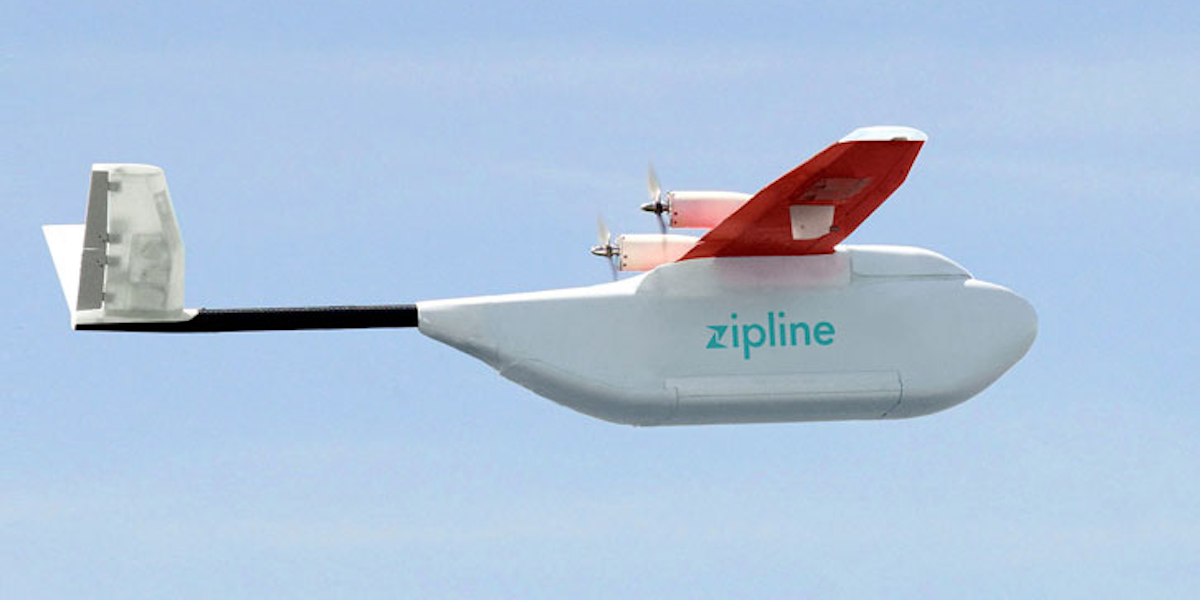
| The zipline drone |
 |
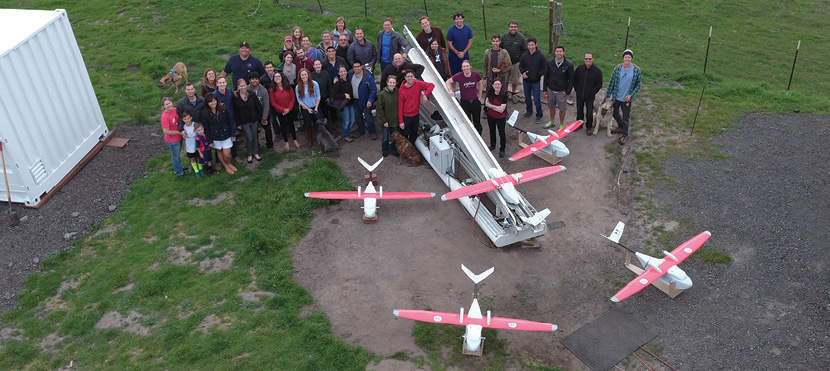
| Zipline team |
 |
| Zipline launcher |
"This
innovative, modern approach ensures we are achieving the best results for the
world's poorest people and delivering value for money for British
taxpayers," said Priti Patel, the International Development Secretary.
It is estimated
that the drone project could support over 50,000 births a year, shortening the
time mothers and new-borns would have to wait for life-saving medicine to 19
minutes as compared to the 110 minutes by traditional transport methods.[2]
They can carry weight up to 1kg of supplies and fly below 500 ft to avoid
getting into air space used by passengers.
As the
approach their destination, the drones drop the altitude and release the
supplies by paper parachutes, before returning to the start point.
DFID will
carry the project in partnership with local firm The Ifakara Health Institute- which
specializes in treatments for malaria, HIV, tuberculosis as well as neonatal
health issues.
Drones are UAVs
(unmanned aerial vehicles) and have long been used in combat, research and to
gather intelligence since 1800s.[3]
As the technology advances and costs fall, civilian day-today uses of UAVs are
developing rapidly. We are all familiar with the increasing use of drones[4]
in aerial photography.
Many people
questioned the use of drones to deliver supplies when Amazon CEO Jeff Bezos’s
2013 announcement that the company would use drones for package delivery.
In 2014, a
drone was used to deliver medical supplies on a remote island in Germany and the
same year Doctors Without Borders used drones to transport dummy tuberculosis
(TB) test samples from a remote village to the city of Kerema, Papua New Guinea.[5]
In US, the
first government approved drone delivery of medical supplies occurred on July
17, 2015 by Flirtey, carrying medicines to a rural popup clinic in Virginia.[6]
Subsequently in July 2016, Zipline International, in partnership with the
Rwandan government began drone delivery of blood and drugs across that country.
The blood was delivered in 30 minutes after receiving the text.
Similarly, Angel
Drone is due to commence a trial of its service in rural New South Wales later
this year. Leading neurosurgeon Charles
Teo,is the ambassador behind this ambitious project and sees various use of
drone in Australian outback hard to reach areas.[7]
Although applications are potentially endless and the drones hold great
promise for medical product transport, the field is still in its infancy. In
the future, we will see delivery of automated defibrillators to acting as a
vehicle for chemotherapy drugs.
Currently in the real world, the
first mass application of drones is for delivery of hemostatic products in
disaster reliefs.
[1] http://tanzania.mynews.club/
[2] http://www.bbc.com/news/technology-38450664
[3] http://sma.org/the-drones-of-medicine/
[4] http://www.nesta.org.uk/drones-history-flying-robots
[6] http://www.usatoday.com/story/news/nation/2015/07/17/faa-drone-medical-supplies-virginia/30296025/
[7] http://www.abc.net.au/news/2016-10-31/drones-to-deliver-medical-supplies/7979442