Showing posts with label Microbirthing: The " Vaginal Seeding". Show all posts

Friday, November 3, 2017

ACOG recommends against vaginal seeding in Cesarean births

© Thinkstock

ACOG today issued a policy statement against the practice of vaginal seeding in cesarean deliveries, in absence of sufficient data on potential benefits associated with the procedure.


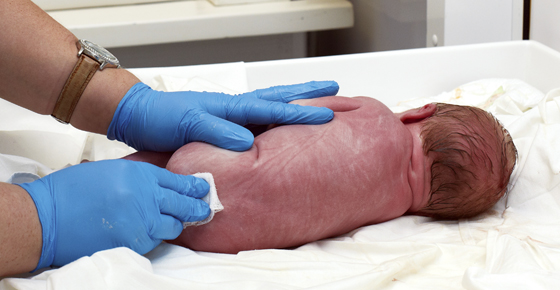
Vaginal seeding is practiced at cesarean birth and consists of transferring maternal vaginal fluid with a gauze or swab to mouth, nose, or skin of a newborn infant to inoculate him with maternal bacteria. 

This practice came into vogue following a dramatic rise in prevalence of childhood asthma, atopic disease, and other immune disorders that paralleled a steep increase in cesarean sections rate worldwide, which prevented the fetal natural colonization with maternal vaginal flora.
At present ACOG only endorse it as a part of research project in institutions under an approved protocol.

If a patient or her attended insist for the procedure, they should be fully informed about the lack of scientific data in favor of any potential benefits. They should be explained the risks associated with the procedure and the mother should be tested for infectious diseases and potentially pathogenic bacteria. Lab testing should be ordered for herpes simplex virus and cultures for group B streptococci, Chlamydia trachomatis, and Neisseria gonorrhea.

The discussion with the patient should always be documented in her medical records and take in presence of other gynecologist, family physician or pediatrician. In the event of neonatal infection or sepsis, they are at least aware of the procedure.

The relationship between breast feeding and childhood asthma and allergies remains uncertain, ACOG recommends exclusive breast feeding for the first six months of life as it has ‘multiple known benefits.’

More research is needed on the subject before the potential benefits of this procedure is documented. Till date, the only available research on vaginal seeding is the result of a small pilot study published in Nature Medicine that was able to document similarities between bacterial communities of infants delivered by cesarean section and undergone vaginal seeding and babies delivered vaginally.

Related posts:


Microbirthing: The " Vaginal Seeding" is growing fad, but thin evidence concerns physicians!

Full Text of the committee opinion

Follow on Facebook and Twitter.


Monday, August 28, 2017

Danish Society of Obstetrics and Gynecology recommends against vaginal seeding in Cesarean births

www.stayathomemum.com.au
The potential risks associated with practice of vaginal seeding (VS) in Cesarean Delivery outweighs the hypothetical benefits and consequently we do not recommend it at present says the national recommendations released by Danish Society of Obstetrics and Gynaecology at the national meeting on 19 January 2017.

The recommendation along with a commentary was published online 22 AUG 2017 in British Journal of Obstetrics and Gynecology.

“We could not identify any other national or international society that had systematically investigated the clinical approach to VS,” write Thor Haahr, MD, PhD, from the Department of Obstetrics and Gynaecology at the Institute for Clinical Medicine, Aarhus University Hospital, Skejby, Denmark.

The recommendations are aimed at providing fellow obstetricians and midwives with the basic information about VS so that it can be discussed with couples and families opting for it.

The recommendations state that:

Maternity wards should not take part in screening, guiding or encouraging women for Vaginal Seeding.

Vaginal seeding is contraindicated in infants born before 37 weeks, born to mothers who meet national criteria for group B streptococci(GBS) prophylaxis during delivery, situations in which the cesarean section is done to prevent vertical transmission of infection such as—primary vaginal herpes infection, HIV infection with HIV-RNA >50 copies/ml and any other situations in which the VS will cause potential harm to the fetus.

Parents who still wish to perform VS, can do so provided “it does not interfere with or delay other procedures.” They should be informed about insufficient evidence in favor of any potential benefit and should be provided with patient information booklet. They should also be educated about signs of infection in neonates should any infection occurs after the procedure.

Interest in VS sparked after Dominguez-Bello and colleagues published the results of their pilot study in 2016 stating that Neonatal colonization can be partially restored in cesarean born babies by VS.  Several other studies have since followed involving VS which stress the importance of more research and publications on this topic.


Although, the risk associated with VS is very low, the immediate concern after VS is early onset neonatal sepsis (EOS) with Escherichia coli or GBS.

David A. Eschenbach, MD, from the Department of Obstetrics and Gynecology, University of Washington, Seattle raised several questions in his accompanying commentary that need to be addressed before VS becomes a routine practice.

His major concern was our current inability to identify that which vaginal bacteria/gut bacteria will produce potential benefit while minimizing the harm. Choosing between ‘harmful’ and ‘helpful’ bacteria is expensive procedure and it is here the cost -benefit analysis comes in.

"We simply are too far behind in knowledge to start this practice without heeding the Society's recommendations," he concluded.

The authors suggest that clinicians whose patients want to adopt the practice should be told about the risk involved and other ways of that have an effect on neonatal colonization, including early skin-to-skin contact, breast-feeding, and diet during pregnancy.

Monday, February 29, 2016

Microbirthing: The " Vaginal Seeding" is growing fad, but thin evidence concerns physicians!


Every 4th baby in UK is born by Caesarean Section. Parents of the Caesar babies are requesting a procedure called as ‘microbirthing’ or ‘vaginal seeding’.

Vaginal seeding involves taking a swab from mother’s vagina and swabbing it over babies face, eyes, mouth and skin immediately after caesarean birth.
This article is based on recent editorial in BMJ (BMJ 2016; 352:i227) by Cunnington A.J. et al “Vaginal seeding” of infants born by caesarean section. How should health professionals engage with this increasingly popular but unproved practice?

Our body is colonized with millions of microbes, collectively called as microbiota. They outnumber our cells by 10:1. The microbiota varies according to parts of our body and also person to person. As described by microbiology professor Graham Rook at University College London, we are designed to live in nature’s biodiverse ecosystem encountering our old microbial friends as part of our early immune education.

During the process of vaginal birth, specific species of good bacteria are transferred to the baby during and immediately after birth via the birth canal, immediate skin-to-skin contact and breastfeeding. This is the seeding of the baby's microbiome. The process heralds the training of baby’s immune system to recognize between ‘good’ and ‘bad’ bacteria and protect the neonate from diseases now and also in future.  Large epidemiological studies and reviews have concluded that babies delivered by C-section have moderately high risk of obesity, asthma, and autoimmune diseases, these  diseases being associated with alteration in microbiota.

For babies entering this world via a C-section, this microbial transfer from the mother to baby is interfered with or bypassed completely. According to the latest research if the baby is not seeded with mother’s bacteria, it can have significant health consequences. Dr Rodney R Dietert, Professor of Immunotoxicology at Cornell University says “Over the past 20-30 years, we've seen dramatic increases in childhood asthma, type 1 diabetes, coeliac disease, childhood obesity. We've also seen increases in Caesarean delivery. Does Caesarean cause these conditions? No. What Caesarean does is not allow the baby to be seeded with the microbes. The immune system doesn't mature, and the metabolism changes. It's the immune dysfunction and the changes in metabolism that we now know contribute to those diseases and conditions.”

So, many researchers advocate that even if vaginal birth is not possible, immediate skin to skin contact and breast feeding should be initiated.

A new documentary “MICROBIRTH” warns how our children are born could have serious repercussions for their lifelong health. “Microbirth” is a new sixty minute documentary looking at birth in a whole new way: through the lens of a microscope. Investigating the latest scientific research, the film reveals how we give birth could impact the lifelong health of our children. http://microbirth.com

In spite of all the hypotheses, we lack scientific proof at present. The newborn may be at risk of developing infection, being exposed to vaginal commensals that the mother maybe harboring without any symptoms. These include group B streptococcus (the most common cause of neonatal sepsis), herpes simplex virus, Chlamydia trachomatis, and Neisseria gonorrhoeae (the last two, causes of ophthalmia neonatorum). These pathogens may also be transferred on a vaginal swab, potentially voiding the protection offered by elective caesarean section.

Clinically we are aware of only one clinical trial going on, called as Potential Restoration of the Infant Microbiome (PRIME) trial. That study is expected to be completed in February, 2019.It is looking at the neonatal microbiota according to mode of birth, the women being screened beforehand for potential pathogens.

Dr. Cunnington, who is the lead author of the article, affirms the lack of sufficient evidence to put vaginal seeding into routine practice. Studies need to be sufficiently large, randomized and need follow up of many years before a recommendation can be made.  

In a statement Dr Cunnington says: "Demand for this process has increased among women attending hospitals in the UK - but this has outstripped professional awareness and guidance. At the moment we're a long way from having the evidence base to recommend this practice. There is simply no evidence to suggest it has benefits - and it may carry potential risks." He also believes in fully informing the risks and harm of this simple procedure to the patients who are demanding it.

He also emphasizes that there are other ways of   influencing baby’s microbiota at birth and “Encouraging breast feeding and avoiding unnecessary antibiotics may be much more important than worrying about transferring vaginal fluid on a swab.”


References:

https://clinicaltrials.gov/show/NCT02407184?link_type=CLINTRIALGOV&access_num=NCT02407184