Showing posts with label CDC. Show all posts

Monday, October 22, 2018

Flu shot reduces the risk of hospitalization by 40% in pregnant women


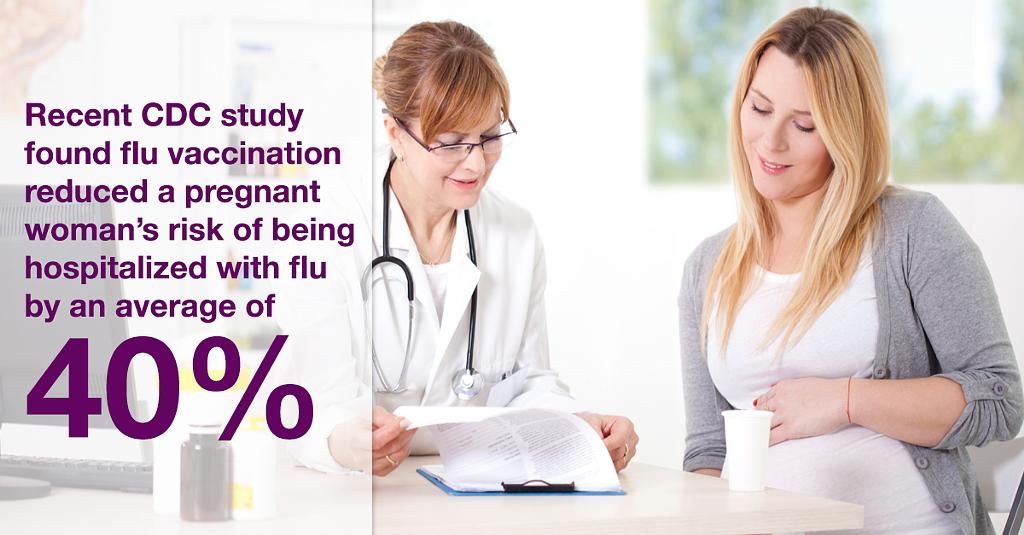
Pregnant women who receive influenza vaccine during pregnancy are at 40% reduced risk of flu hospitalization as compared to women who are not vaccinated during pregnancy reports the results of a Center for Disease Control (CDC) co-authored study published online October 11, 2018, in the journal Clinical Infectious Diseases.

“Expecting mothers face a number of threats to their health and the health of their baby during pregnancy, and getting the flu is one of them,” explains Allison Naleway, Ph.D., a study co-author from the Kaiser Permanente Center for Health Research. “This study’s findings underscore the fact that there is a simple, yet impactful way to reduce the possibility of complications from flu during pregnancy: get a flu shot.

In this retrospective cohort study, the researchers gathered data from more than 2 million pregnancies for 6 years (2010-2016), across cross 5 regions in 4 countries through the Pregnancy Influenza Vaccine Effectiveness Network (PREVENT), which consists of healthcare systems with integrated laboratory, medical, and vaccination records. Nearly 85% of pregnancies were ongoing during the flu season making it highly likely that pregnant women were exposed to flu at some point during their pregnancy.

Key study findings include:

With nearly 84% pregnancies overlapping the influenza season, the risk of influenza virus infection is a real threat during pregnancy.
Influenza vaccine reduced the risk of moderate to severe laboratory-confirmed influenza (LCI) infection during pregnancy.
Flu vaccine was equally protective in women with other medical co-morbidities like asthma and diabetes, which puts them at higher risk of other medical complications.
Flu vaccine offers equal protection during all the three trimesters.

“Our study found that flu vaccination worked equally well for women in any trimester and even reduced the risk of being sick with influenza during delivery,” adds Mark Thompson, Ph.D., a study co-author and epidemiologist with CDC’s Influenza Division.

In addition to protecting the mothers from flu while being pregnant, influenza vaccine offers protection to the newborn for several months after birth, till they are old enough to get vaccinated.

Wednesday, June 1, 2016

First baby born with ZIKA related microcephaly in Continental US


Tuesday saw the birth of first baby born with Zika related microcephaly at the  Hackensack University Medical Center, New Jersey. This is the second known case of a baby born with Zika-related birth defects in the United States. The first baby was born in Hawaii.

The mother is from Honduras and travelled to US to her relatives in hope of better medical care. Doctors in US believe that she contracted the disease probably in second trimester when she had fever and rash, which are symptoms of viral infection.

Her OBGYN  in Honduras suspected that she  had a baby with IUGR  and coordinated with CDC to send the samples for testing. As expected the results came back positive.

A last trimester ultrasound  revealed that baby had abnormalities including severe microcephaly, calcification of the brain, bowel problems and restricted growth.

Baby was delivered by emergency C-section and also suspected to suffer from other problems.

Honduras is one of half a dozen Latin American and Caribbean countries where abortion is not legal with no exceptions, not even to save a woman’s life, according to reproductive rights advocacy groups.

 As of May 12, 2016, the two Zika virus infection surveillance systems are monitoring 157 pregnant women in the U.S. states and 122 pregnant women in the U.S. territories with laboratory evidence of possible Zika virus infection.  That is a total of 279 pregnant women in U.S. states and territories who are followed closely as a part of national registry.

Till date almost 600 cases of Zika have been diagnosed in the US, but all sufferers have travelled to an infected country and none of them got infected in US.

According to the World Health Organization (WHO), women planning to become pregnant should wait at least eight weeks before trying to conceive if they or their partner live in or are returning from Zika virus hotspots.

The case comes at a time when Congress has yet to approve new funding to fight the virus, despite months of White House pressure. Congressional Republicans have rejected the White House’s request for $1.9 billion in new funds. 

References:
http://www.cdc.gov/media/releases/2016/s0520-pregnant-women-zika.html
http://www.cdc.gov/zika/hc-providers/registry.html


Thursday, April 14, 2016

CDC Confirms the link between Zika infection and microcephaly.


Zika has been linked to microcephaly since Brazil reported a sudden increase in number of infants born with microcephaly in September 2015, but causation was not established. CDC today made an important announcement after careful review of all the possible evidence that Zika virus is a cause of microcephaly and other severe fetal brain defects.

The study is published online in the New England Journal of  Medicine today.

“This study marks a turning point in the Zika outbreak.  It is now clear that the virus causes microcephaly.  We are also launching further studies to determine whether children who have microcephaly born to mothers infected by the Zika virus is the tip of the iceberg of what we could see in damaging effects on the brain and other developmental problems,” said Tom Frieden, M.D., M.P.H., director of the CDC. “We’ve now confirmed what mounting evidence has suggested, affirming our early guidance to pregnant women and their partners to take steps to avoid Zika infection and to health care professionals who are talking to patients every day. We are working to do everything possible to protect the American public.”

The investigators examined the causality evidence in light of Shepard’s criterias, which is set of rules that must be satisfied before labeling  an agent being ‘ teratogenic’  and causing  congenital malformations. According to the Shepard’s criterias, causality is established when either criteria 1, 3, and 4 (rare exposure–rare defect approach) or criteria 1, 2, and 3 (epidemiologic approach) are fulfilled.

So, the relationship between Zika infection and microcephaly was termed casual under the rare exposure–rare defect approach as criteria 1, 3 and 4 were fulfilled:

  1. Proven exposure must occur at a critical time during prenatal exposure: The microcephaly and other anomalies occur when the exposure occurs during first trimester or early second trimester. 
  2. Careful delineation of clinical cases with the finding of a specific defect or syndrome: Infants with Zika infection do have a typical pattern which includes severe microcephaly, intracranial calcifications, and other brain anomalies, sometimes accompanied by eye findings, redundant scalp skin, arthrogryposis, and clubfoot which led the scientist to coin a term “Congenital Zika Syndrome.”
  3. Rare exposure and a rare defect: This criterion was met because microcephaly is a rare defect with an incidence of 6 infants per 10,000 liveborn infants in the United States and infection in travelers who spent a limited amount of time in Brazil with active infection, constitute rare exposure for the patients.


Also supportive of causation is lack of alternative explanation for sudden increase in microcephaly cases in Brazil, French Polynesia and Colombia.

But, proving the causation is not enough in the fight against Zika infection. Many key questions are yet to be answered that have important implications.

CDC's director, Tom Frieden, MD said “We are launching further studies to determine whether children who have microcephaly born to mothers infected by the Zika virus is the tip of the iceberg of what we could see in damaging effects on the brain and other developmental problems," in a statement.

In addition to this researchers are also interested in knowing relative and absolute risk of infection and malformation. At present 1% to 29% of babies are born with microcephaly of all the mothers infected with the virus. They are also looking at other factors that modify the risk and severity of infections, such as gestational week at infection, additional morbidities and co-viral infection like Dengue fever.

CDC has not changed the travel warning or guidelines related to Zika infection after this publication.

Mark S. DeFrancesco, MD, MBA, President of the American College of Obstetricians and Gynecologists (ACOG), released the following statement regarding the U.S. Centers for Disease and Control and Prevention (CDC) paper addressing Zika virus “The message of the CDC paper underscores the importance of ongoing research into this outbreak. We once again encourage Congress to act swiftly to pass emergency funding to enhance our public health preparedness and enable America’s researchers to lead the charge in the development of a vaccine or treatment for this virus. Ongoing support for Zika virus research will protect American families and, indeed, families around the world."

References:
http://www.nejm.org/doi/full/10.1056/NEJMsr1604338?query=featured_home&
http://www.acog.org/About-ACOG/News-Room/Statements/2016/ACOG-Statement-on-the-CDC-Update-on-Zika-Virus
http://www.cdc.gov/media/releases/2016/s0413-zika-microcephaly.html

Sunday, January 17, 2016

Microcephaly in Brazil potentially linked to the Zika virus epidemic says European Center for Disease Control (ECDC).


photo by CDC PHIL, Aedes Mosquito


New European Center for Disease Control ( ECDC) risk assessment is currently evaluating a possible link between the observed increase of congenital microcephaly in Brazil and Zika virus (ZIKV) infection.

Until recent months Zika virus was not widely associated with microcephaly.

According to CDC, in the past four months, microcephaly cases in Brazil rocketed to 3,500 from 147, the average for the same time last year (2014).  About 46 babies have died due to birth defects.

The link was first detected when Brazilian health authorities found traces of the Zika virus in a deceased infant born with microcephaly or in amniotic fluid of mothers delivering microcephalic infants.

The first confirmed cases of ZIKV infection in Brazil were reported in May 2015.

Transmission of the virus in Brazil is likely to have started several months before because the disease is new and mild, and could have been unrecognised or misdiagnosed, as dengue and chikungunya epidemics were ongoing.

Microcephaly caused due to any infection is usually caused by transplacental infections occurring early in pregnancy and is only detected during the second half of pregnancy or after birth.

The observed six months delay between the recognition of the transmission of ZIKV in May 2015, and the detection of an increase in microcephaly in November 2015, is therefore compatible with a temporal association between the two events.

Currently there is only ecological evidence of an association between the two events, due to sudden epidemic of microcephalic babies born and clustered around a specific time period.

A possible causative association cannot be ruled out but further investigations and studies are needed to understand the association and the possible role of other factors, states the ECDC risk assessment.

In November the Brazilian Ministry of Health declared a public health emergency in relation to an unusual increase in the number of children born with microcephaly in 2015.

In addition to Brazil's findings, French Polynesian health authorities have also reported an unusual increase in autoimmune and central nervous system malformations in babies born during a Zika virus outbreak on the islands from 2014 to 2015. (73 cases, 42 of them being Guillain-Barré Syndrome, in a population of about 270 000). 

CDC map illustrates areas affected or possibly affected by the spread of Zika virus


Zika virus disease is a mosquito-borne viral disease caused by Zika virus (ZIKV), a flavivirus from the Flaviviridae family and is primarily transmitted through the bite of infected Aedes mosquitoes.

The virus was first identified in 1947 in the Zika forest in Uganda in the rhesus Macaque population and have two main lineages, the African lineage and the Asian lineage.

Prenatal or perinatal complications of ZIKV infections have not been described in the literature. There is some evidence that perinatal transmission can occur, most probably transplacental or during the delivery of a viraemic mother. However, materno-foetal transmission has been demonstrated for several other Flaviviruses (dengue, West Nile fever).

Some other Flavivirus infections are known to have the potential to cause premature birth, congenital defects and microcephaly.

The most common symptoms of Zika virus disease are fever, rash, joint pain, and conjunctivitis (red eyes). The illness is usually mild with symptoms lasting from several days to a week.

Meanwhile, Brazilian officials are also reporting neurologic complications in other Zika virus patients, primarily Guillain-Barre syndrome, which has also been seen in French Polynesian patients who had suspected infections. "Although neither even establishes a causal relation with Zika virus, the hypothesis cannot be ruled out," says a health official in Brazil.

In conclusion, a causative association between microcephaly in newborns and ZIKV infection during pregnancy is plausible, but not enough evidence is available yet to confirm or refute it. Many studies are needed before a definite conclusion can be reached.

There is no vaccine to prevent infection or medicine to treat Zika virus.

Meanwhile, CDC issues a travel advisory to pregnant women  to consider postponing travel to areas where Zika virus transmission is ongoing.


References:


Friday, January 1, 2016

Few decisive articles in gynecology from 2015


Medication approved for low sexual desire in women.

Flibanserin is the first and currently only drug approved by the US Food and Drug Administration (FDA) for female sexual dysfunction. The U.S. Food and Drug Administration today approved Addyi (flibanserin) to treat acquired, generalized hypoactive sexual desire disorder (HSDD) in premenopausal women. It is hailed by many as “Female Viagra”, but the daily dosing, severe adverse reaction when combined with alcohol, somnolence and dizziness limits its use. Also the daily dosing will only result in   modest increase in sexually satisfying event and sexual desire.


New guidelines from Bethesda for cervical screening cytology reporting.

The past decade has witnessed several changes in the realm of cervical cancer screening, prevention, and management. A new category was created as ‘ASC-H ‘which includes those Low-grade squamous intraepithelial lesion (LSIL) specimens that contain a few cells that are suspicious for but not diagnostic of high-grade squamous intraepithelial lesions (HSIL). More testing is recommended in the form of colposcopy and biopsy.
The Bethesda System 2001 for reporting cervical cytology recommends reporting benign-appearing, exfoliated endometrial cells (BEC) in women aged 40 years or older. The 2014 guidelines advocate it’s reporting only in women ≥45 years as finding of BEC was not found to be effective for predicting endometrial hyperplasia or carcinoma in women aged 40-45 yrs. 


CDC updates the guidelines on the management of sexually transmitted infections in June 2015. 


These updated guidelines discuss:


  • Screening recommendations for gonorrhea and chlamydia;
  • Nucleic acid amplification tests for diagnosing trichomoniasis;
  • Updated treatment for chlamydia during pregnancy;
  • Updated human papillomavirus (HPV) vaccine recommendations;
  • Alternative treatment options for genital warts;
  • The role of Mycoplasma genitalium in urethritis and cervicitis;
  • Information on the clinical care of transgender men and women.
  • Annual testing for hepatitis C in persons with HIV-infected men who have sex with men and T. vaginalis testing for HIV-infected women annually and when pregnant;
  • Updated recommendations for diagnostic evaluation of urethritis;
  • T. vaginalis retesting in women to detect repeat infection after 7 days of treatment.

Timing is important in Menopausal Hormone Therapy (MHT).


The use of MHT has been a subject of debate two decades.  However studies in 2015 and an updated version of Cochrane review that was published in 2013 lend support to the ‘timing hypothesis’, which posits that cardiovascular benefit may be derived when ET or HT is used close to the onset of menopause. It is seen in recent studies that menopausal hormone therapy (MHT) in the early menopausal years (<10 years from menopause) may not be associated with excess cardiovascular risk when compared with use in the later menopausal years.
This hypothesis was further supported by a meta-analysis of 19 trials of oral HT (which included the women’s health initiative) leading to a combined total of 40,410 post-menopausal women. These women had a lower risk of coronary heart disease (CHD) compared with placebo and a lower mortality rate. The relationship of duration of therapy to cardiovascular outcomes awaits further study. Furthermore, additional studies on progesterone versus synthetic progestins are needed.

Topical steroids confer protection against Vulvar carcinoma in women with Vulvar Lichen Sclerosus(VLS).


A prospective longitudinal cohort study conducted by a private dermatologist and gynecologist included 507 women with histologically proven VLS. The study objective was long-term preventive topical corticosteroid (TCS) treatment of VLS, with a target outcome of induction and maintenance of normal skin texture and color, reduces the risk of vulvar carcinoma, relieves symptoms, improves function, and preserves vulvar architecture, and to evaluate the adverse effects of treatment.
It was seen that women who was compliant with the treatment had a better chance of near normal cosmetic appearance, decreased risk of vulvar carcinoma. The adverse effects of corticosteroids were minimal.

References:


http://www.ncbi.nlm.nih.gov/pubmed?term=25754617