Monday, February 4, 2019

FDA approves first ever diagnostic test for Mycoplasma genitalium


The US Food and Drug Administration (FDA) approved the first-ever diagnostic test to aid in the diagnosis of sexually transmitted Mycoplasma genitalium infection. The Aptima Assay from Hologic Inc, is the only FDA-approved test to detect this under-recognized but increasingly common sexually transmitted infection (STI).

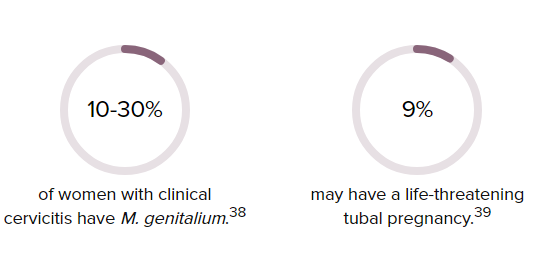
First discovered in the early 1980s, M. genitalium was listed as an emerging public health threat by the U.S. Centers for Disease Control and Prevention (CDC) in 2015. Currently, it is responsible for causing approximately 15 to 30 percent of persistent or recurrent urethritis cases in men in the United States and 10 to 30 percent of cervicitis cases in women.

This slow-growing pathogen is difficult to detect by traditional laboratory testing methods. In the absence of FDA approved diagnostic test, the STI is often misdiagnosed and treated with wrong antibiotics resulting in persisting infection and widespread transmission.


“Although Mycoplasma genitalium is typically more common than gonorrhea, there is very little public awareness of this rising sexually transmitted infection, which can cause serious and potentially devastating health problems,” said Damon Getman, Ph.D., senior principal research scientist and director of research at Hologic in a press release.

The Aptima Assay is a nucleic acid amplification test, which detects M. genitalium in urine samples and urethral, penile meatal, endocervical or vaginal swab collected in a clinical setting, such as a doctor’s office or clinic.

In the clinical study involving 11,774 samples, the Aptima test correctly identified M. gen. in approximately 90 percent of vaginal, male urethral, male urine and penile samples. It also correctly identified the presence of the pathogen in female urine and endocervical samples 77.8 percent and 81.5 percent of the time.

The test also has a high negative predictive value and correctly identified the negative samples 97.8 to 99.6 percent of the time. Vaginal swabs are the preferred samples to perform the test, but urine samples can be used as alternative sample types.

The assay is immediately available at clinical laboratories, physicians and healthcare providers can immediately order the tests by reaching out to the labs. Hologic further anticipates that most insurance plans will cover the testing for M. genitalium.

The Aptima Mycoplasma genitalium Assay was reviewed through the de novo premarket pathway, a regulatory pathway for some low- to moderate-risk devices of a new type.  The FDA exercises special controls over the individual tests approved by the de novo premarket route to ensure the safety and effectiveness of the tests.

The newest M. genitalium assay joins the comprehensive list of men and women’s health assays by Hologic that include sexual and cervical health, and virology testing.

Wednesday, January 30, 2019

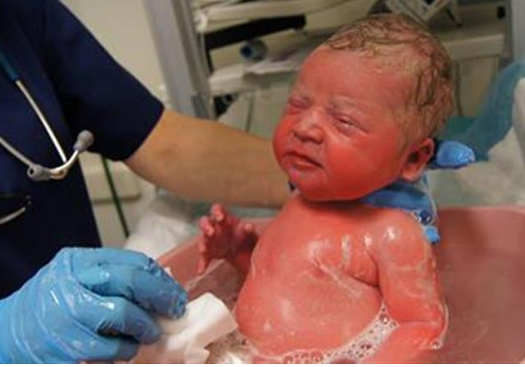
Delaying newborn's first bath increases exclusive breastfeeding rate

A new Cleveland Clinic study has shown that delaying the first baby bath after delivery increases the breastfeeding rate by 8%, with 49% increased odds of exclusive breastfeeding while in the hospital. These mothers also continued breastfeeding their babies after discharge from the hospital. The odds further increased to 60% if the mother had a vaginal birth versus cesarean birth. 

The researchers at Cleveland clinic looked at data from about 1000 mother-newborn couplets in this retrospective, two-group, pre- and postintervention design study. In the intervention group, the first bath was delayed for at least 12 hours vs. following the routine hospital practice of bathing the baby in a couple of hours after birth in the control group.

The demographics were comparable in both the groups. After multivariate regression analysis, it was observed that there was a significant increase in exclusively breastfeeding rates in the study group in whom the bath was delayed for 12 hours.

Why delaying the bath increases the breastfeeding rate is unclear, but researchers behind the study speculate that similarity between the smell of breast and amniotic fluid may better help the baby to latch.

The study adds support to the initiative of establishing immediate skin-to-skin (STS) contact between mother and baby. STS contact has been promoted internationally through the Baby-Friendly Hospital Initiative (BFHI) as a means to improve breastfeeding initiation, exclusivity, and duration after hospital discharge.

“Human touch is vital to the parent and the baby. You need to have that human touch. I think that by not washing the baby (so soon), encouraging skin-to-skin contact and breastfeeding, you’re improving that human touch. So, you’re now looking at a long-term health benefit,” explains Heather DiCioccio, DNP, RNC-MNN, who led the study. The study was published ahead of print in Journal for Obstetrics, Gynecologic, and Neonatal Nursing.

Those babies who received bath after 12 hours were also able to maintain their temperature better as compared to early bathers.

Research has also shown that increased rates of breastfeeding have a wealth of benefits for mother and child in years to come. Risk of childhood and maternal illnesses decrease considerably potentially decreasing the lifetime healthcare costs.

Here is a beautiful video by Cleveland Clinic explaining the findings


Wednesday, January 23, 2019

NAMS video series 2019: Understanding the etiology and mechanism of vasomotor symptoms


The North American Menopause Society (NAMS) regularly posts comprehensive videos for clinicians about important midlife health topics. All interviews in the series are hosted by NAMS Board of Trustees Member and Past-President Dr. Marla Shapiro, a Canadian physician who led this exciting initiative. Dr. Shapiro is also a medical consultant for CTV News.

In this first video of 2019, Dr. Rebecca Thurston, Director of the Women’s Biobehavioral Health Laboratory and Professor of Psychiatry, Psychology, Epidemiology, and Clinical and Translational Science at the University of Pittsburgh throws some light on the why and how about vasomotor symptoms (VMS).

The natural history of vasomotor symptoms is still evolving. It is estimated that about 75% of women experiencing menopause will have hot flashes. A substantial number of women seen in everyday gynecological practice or specialty menopause clinic report VMS well past the age of 60 and some well into the 80s.


Hot flashes considerably reduce the quality of life and hamper the day to day activities. Prevalence of VMS is generally associated with increased risk of CVD due to endothelial dysfunction. Hence, women with VMS could be screened for CVD risk factor and offered lifestyle modifications and frequent screening for early diagnosis and prevention.