Showing posts with label Mastectomy. Show all posts

Thursday, April 12, 2018

Could perioperative NSAIDs treatment markedly reduce metastatic breast cancer recurrence?


Perioperative anti-inflammatory treatment could prevent or reduce the risk of secondary spread of breast cancer after the primary resection surgery according to a paper published April 11 in Journal of Science and Translational Medicine.

The study was conducted in mice but could offer an explanation for the resurgence of the tumor after primary surgery in humans too. It has been a long-known fact that after undergoing lumpectomy or mastectomy, there is metastatic recurrence elsewhere in the body after a year or two.

The cause of this is long been debated, some researchers taking it as the natural progression of disease while others propose that handling of the tumor during surgery release the cancerous cells in the circulation.

The researchers set up an experimental wound healing mice model who had breast cancer. They did not do any surgery or disturbed the primary tumor. The systemic inflammatory response to wound led to new tumor growth at the distant site, which was kept in check by the tumor-specific T cell response. Probably, the wound healing consumed all the T-cells that previously kept a check on tumor cells.


The researchers gave the mice NSAIDs for wound healing and noted that the growth of secondary metastasis was curbed considerably.

Earlier clinical studies have suggested that perioperative anti-inflammatory drugs reduce early metastatic recurrence in breast cancer patients, but no explanation was put forth for the cause.

A 2012 study particularly showed that breast cancer patients given the anti-inflammatory drug ketorolac during surgery were five times less likely to have their cancer spread than people who didn’t get the painkiller

“This represents the first causative evidence of surgery having this kind of systemic response,” Jordan Krall, the first author of the study and a researcher at the Massachusetts Institute of Technology's White Head Institute for Biomedical Research, said in a statement announcing the study's publication.

“Surgery is essential for treating a lot of tumors, especially breast cancer," Krall added. "But there are some side effects of surgery, just as there are side effects to any treatment. We’re starting to understand what appears to be one of those potential side effects, and this could lead to supportive treatment alongside surgery that could mitigate some of those effects.”

It’s not yet clear whether any specific NSAIDs will give more benefit than others, or what’s the best dose or timing to deliver the drug.

Professor Robert Weinberg, the new study’s senior author says, “Mice are not people and therefore this may not translate into clinical practice. Our paper is only intended to alert people to this possibility and to explore whether this mechanism operates as well in humans as we think it might.”

Scientist agrees that more research is needed to investigate an explanation as simple as this, as NSAIDs are routinely used in the peri and postoperative period to ease the pain.


Thursday, April 5, 2018

Double Mastectomy reduces the risk of death in BRCA1 mutation carriers but not in BRCA2 carriers


An interesting paper recently presented at the 11th European Breast Cancer Conference in Barcelona, Spain stratifies the risk of death based on the type of BRCA gene mutation. Healthy women who are carriers of breast cancer-causing mutation in the BRCA1 gene and undergo the bilateral mastectomy, not only reduce their risk of developing breast cancer but also their chances of dying.

But, this is not the case with women who are carriers of the BRCA2 gene mutation, in whom the risk of dying was not reduced if women had the bilateral risk-reducing mastectomy (BRRM) or chose to have a close surveillance.

This is the first prospective study of healthy women with BRCA1 gene mutation (1696 women) or BRCA2 mutation (1139 women) who either chose to undergo BRRM or close surveillance, to compare their overall risk of dying from any cause and their risk of dying from breast cancer.

The women were recruited from the National Hereditary Breast and Ovarian Cancer Netherlands (HEBON) database and did not have any previous history of cancer. They also have not undergone breast or ovaries removal at the time of DNA diagnosis of BRCA1 or BRCA2 gene mutation.

The average follow-up in both the mutation types was between 9 to 11 years. In BRCA1 group, women who had undergone BRRM had considerable more chances of overall survival (90%) and breast cancer-specific survival (99.6%) compared to surveillance group where the overall survival was 83% and breast cancer-specific survival was 93%.

In the BRCA2 group, the overall survival and breast cancer specific survival did not differ much among both the groups.

Dr. Annette Heemskerk-­Gerritsen, a post-­doctoral researcher at the Erasmus University Medical Centre Rotterdam, The Netherlands said at the conference, “the difference in the chances of dying from breast cancer between BRCA1 and BRCA2 gene mutation carriers supports the idea that these two mutations result in different types of tumors.”

“We observed that BRCA2-­associated breast cancers were diagnosed with more favorable characteristics than BRCA1-­associated breast cancers. BRCA2-­associated cancers were diagnosed at an older age, better differentiated, and were more likely to have receptors for the hormones estrogen and progesterone and for the human epidermal growth factor (HER2), suggesting that BRCA2  mutation carriers face a better prognosis at diagnosis than BRCA1 mutation carriers,” She further added.

The results of the study mean that women with BRCA2 gene mutation can choose between BRRM or surveillance knowing that it makes little difference to whether or not they will die from breast cancer.

 However, they will still be at increased risk of developing the disease, and the treatment for it can be unpleasant and carries its own risks.

These findings are important because they help in individualized counseling regarding the difficult choice women with BRCA mutation face between BRRM and surveillance.

Many of the women want to retain their breast and they are willing to face the risk of developing breast cancer and undergoing essential treatment after diagnosis. Knowing the type of mutation, they carry, they may find some relief in knowing that ongoing intensive surveillance may be as good as BRRM when it comes to breast cancer-­specific survival if they have BRCA2 mutation.

Conference news release


Wednesday, January 11, 2017

FDA Approves Novel AeroForm Tissue Expander system for breast reconstruction.

AeroForm Systems.

The AeroForm Tissue Expander systems by AirXpanders, a US based medical device company based at Palo Alto, California, won FDA approval to be introduced in US Markets.[1] AeroForm is currently available in Australia, where it was approved for sale in late 2014.[2]

It can also be used for patients with underdeveloped breasts and soft tissue deformities or scarring.

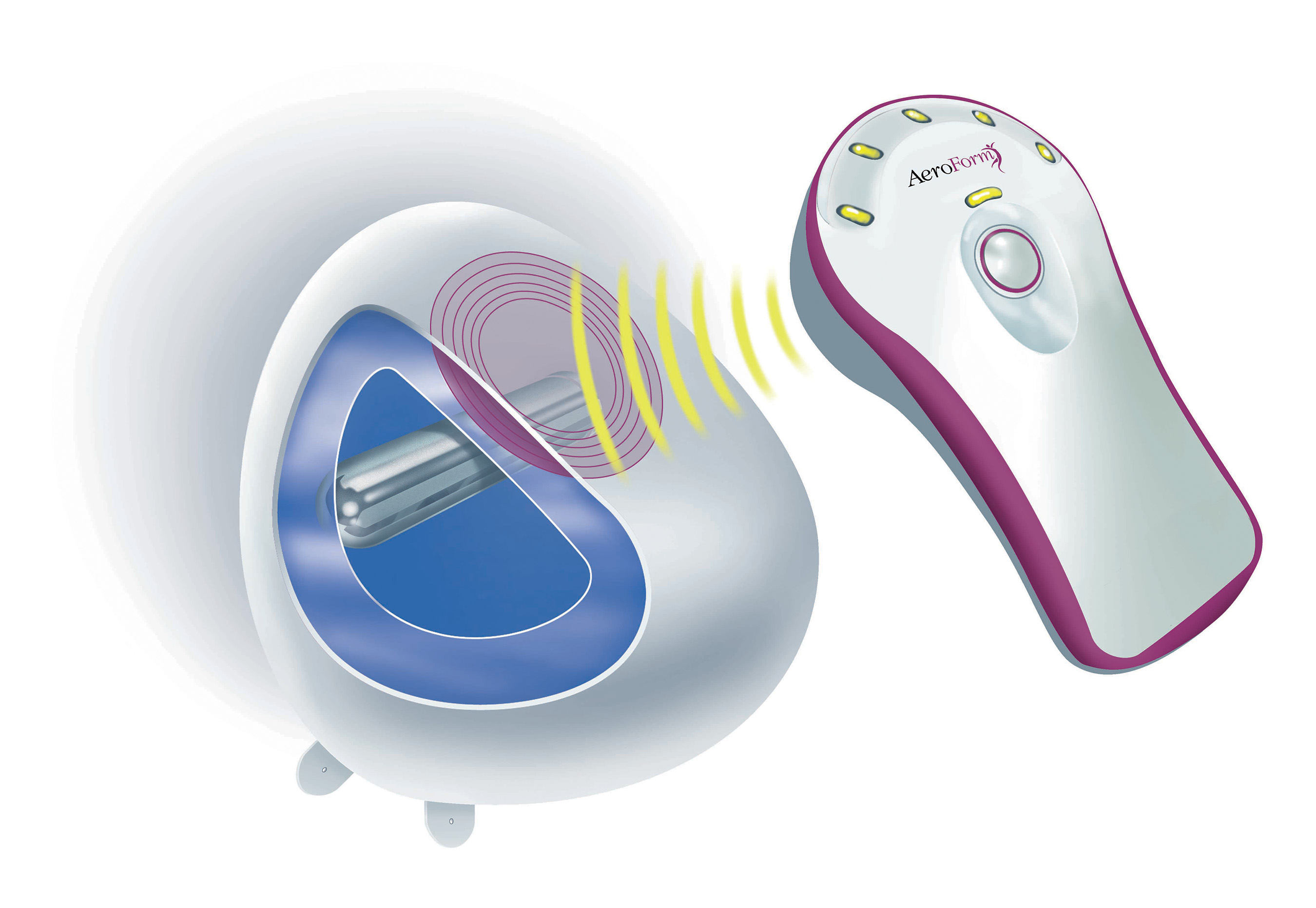
AeroForm has two main components: the “expander’ is a sterile implant with an outer silicone shell and a remote dosage “controller”. The expander houses a gas reservoir that is released gradually to inflate the expander by the controller.


http://www.airxpanders.com/aeroform-technology/


Surgeons are using saline expanders since last 40 years to expand the soft tissue and prepare patients for breast implants following mastectomies. Currently, saline expanders are implanted by surgeons and requires regular office visits for injections of saline. The AeroForm system is placed behind the chest and uses a gradual patient-controlled release of compressed carbon dioxide to expand the tissue in preparation for breast implant.

The patient controls the doses of carbon dioxide by a hand held remote control device. AeroForm doses are small 10cc puff each that gets the patient expanded in 17 days’ vs 3 months taken by saline expanders.


Data from the XPAND pivotal clinical study on the use of the system was presented at the American Society of Plastic Surgeons (ASPS) Plastic Surgery: The Meeting 2016 in Los Angeles.  In the study 99 patients used AeroForm while 52 patients used saline expander.  A significant reduction in time to expansion, with increased patient satisfaction and safety was achieved by AeroForm.


A company video discussing the AeroForm Tissue Expander System:


Jeffrey Ascherman, MD, chief of the division of plastic surgery at Columbia University and principal investigator for AirXpanders' U.S. XPAND trial said "As surgeons, we have long understood the burden that tissue expansion places on women during breast reconstruction. As greater numbers of women have mastectomies, there is a real need to make the process shorter and more comfortable for women.”

He further added “Reconstruction is one of the last phases of a long and sometimes taxing journey for women who are treated for breast cancer. They have lost time and control, and are eager to get back to their lives. Needle-free, patient-guided expansion could be a suitable option for many women undergoing the reconstruction process."

The adverse effects seen with the device are necrosis, seroma, procedural pain and wound infection.

FDA notes in its news release “Patients must not have any residual tumor at the expansion site and must not undergo magnetic resonance imaging (MRI) while the device is in place. Patients with another electronic implant (e.g. pacemaker, defibrillator, or neurostimulator device) are not eligible for treatment with the AeroForm tissue expander."


[1] http://www.fda.gov/NewsEvents/Newsroom/PressAnnouncements/ucm534192.htm
[2] http://www.airxpanders.com/aeroform-vs-saline/