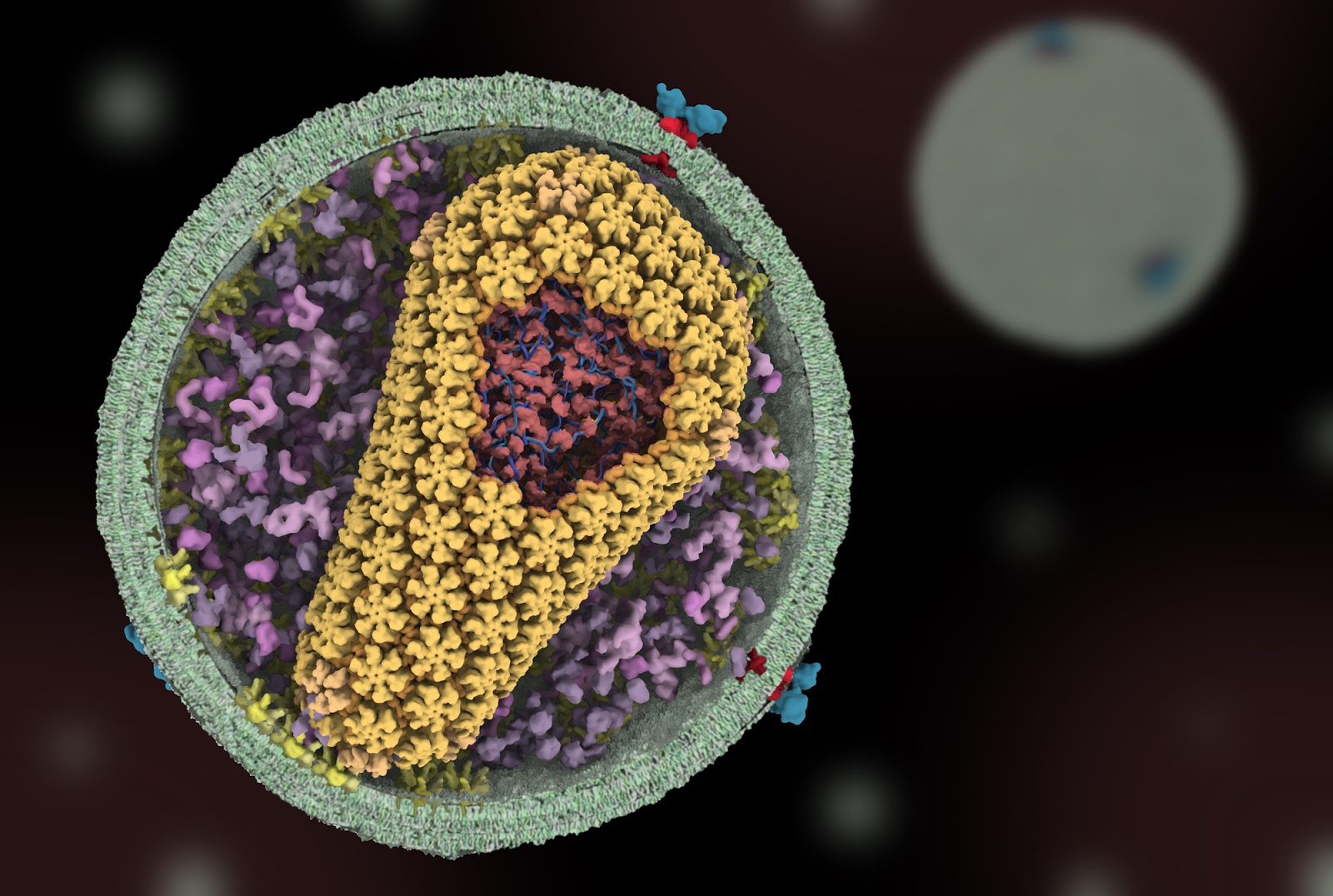
Janet Isawa, Ph.D. Assistant Professor in Department of Biochemistry at the University of Utah in collaboration with other Human immunodeficiency virus (HIV) researchers round the globe has created an interesting, educative website ‘Science of HIV’ for easy understanding of HIV infection.
HIV is the causative agent of AIDS (Acquired Immunodeficiency Syndrome), first recognized by the United States Centers for Disease Control and Prevention (CDC) in 1981. Since its initial discovery, HIV/AIDS has risen to become a global pandemic, has caused an estimated 35 million deaths worldwide.
According to CDC, about 36.7 million people were living with HIV around the world and there were 1.8 million new cases of HIV diagnosed in 2016.
The website uses colorful animations and illustration to educate a wide range of audience about how HIV infects human body, it’s life cycle and why it is so difficult to cure the infection.
The project is funded by the National Institute of General Medical Sciences (NIGMS) and was carried out as part of the CHEETAH and HIVE consortia.
The President’s
Program at the opening of ACOG annual conference in Austin, Texas stressed the
importance of comprehensive pregnancy care that should extend well beyond the
third trimester and labor into period 3 months post-delivery, rightly called as
“the fourth trimester”.
Keeping with
this year theme of “Medical and Surgical Innovations in Health Care,” the
President’s program was not three separate lectures but a ‘President Panel’ that
included 3-star speakers discussing “The New Postpartum Visit: Beginning of
Lifelong Health.”
Dr. Brown
opined that ob-gyns are the primary doctors that most women see for the bulk of
care throughout their lives and we must make it sure that we also meet her
additional healthcare needs beside pregnancy and gynecology care.
Postpartum
care was always in focus throughout Dr. Brown’s tenure as ACOG President. The
task force on “Redefining the Postpartum Visit” and ACOG Committee on Obstetric
Practice have released a revised “Optimizing Postpartum Care” Committee Opinion
published in the May issue of Obstetrics & Gynecology.
ACOG
previously recommended that all women should have a comprehensive health check-up
visit within the first 6 weeks after birth, now ACOG recommends that post-partum
care is an ongoing process and women should stay in contact with their obstetrician
or other obstetric care provider for the first three weeks after birth.
This close
contact with the obstetrician is especially important for elderly mothers and
women with chronic diseases. The initial visits should culminate into a comprehensive
individualized post-partum visit at 12 weeks that includes a full assessment
of:
Mood and
emotional well-being
Infant care
and feeding
Physical
recovery from birth
Physical
intimacy, spacing and contraception
Sleep and
fatigue
Chronic disease
management
General health
maintenance
Early
follow-up is also important for women who had cesarean section, perineal
lacerations, lactational difficulties or postpartum depression.
Mothers who
had any superimposed medical problems gestational diabetes mellitus or hypertensive
disorders or had a preterm labor should undergo special counselling about the
increased risk of these disease later in life.
Those women
who have had a pregnancy mishap also benefit from early visit in terms of
emotional support and counselling and referrals as needed for future risk of
such mishap.
It is known
that one half of postpartum strokes occur within 10 days of discharge, hence
women with hypertensive disorder of pregnancy should have the first follow-up
within 7-10 days and those with severe hypertension should be in within 72
hours to evaluate the status of blood pressure.
The
postpartum visit at 12 weeks serves as a transition towards the ongoing well-women
care. The obstetric care provider should initiate communication with the patients’
primary care provider regarding the medical problems faced by her in pregnancy and
the future implications of such problems on the woman’s long-term health.
Currently, about
40% of women do not come for a follow-up visit and important opportunities for contraception
counselling and spacing and treatment of chronic health condition is lost.
“New mothers
need ongoing care during the ‘fourth trimester.’ We want to replace the one-off
checkup at six weeks with a period of sustained, holistic support for growing
families,” said Alison Stuebe, M.D., lead author of the Committee Opinion. “Our
goal is for every new family to have a comprehensive care plan and a care team
that supports the mother’s strengths and addresses her multiple, intersecting
needs following birth.”
Dr Brown
added “This revised guidance is important because the new recommended structure
is intended to consider and cater to the postpartum needs of all women,
including those most at risk of falling out of care.”
An Afghanistan war veteran receives a new penis and a scrotum without testicles and a partial abdominal wall from a deceased donor at the John Hopkins in Baltimore.
The soldier was wounded by an improvised explosive device while serving in Afghanistan. The patient’s name was not released to maintain his privacy, but he has already been discharged from the hospital. "When I first woke up [after the intervention], I felt finally more normal... [and with] a level of confidence as well. Confidence... like finally I'm okay now," he explains.
The transplant team included nine plastic surgeons and two urological surgeons, and it took them 14 hours to perform the complicated procedure. “We are optimistic he will regain near-normal urinary and sexual functions,” said W. P. Andrew Lee, director of plastic and reconstructive surgery at the Johns Hopkins University School of Medicine.
Lee described the loss of genitals as an “unspoken injury of war,” with devastating consequences for intimacy and happiness.
Urinary functions will be restored immediately while Sexual function, including sensation and the ability to get an erection, could be gained in about six months, said Richard Redett, a Johns Hopkins plastic and reconstructive surgeon and clinical director of the genitourinary transplant program.
This type of transplant, where a body part or tissue is transferred from one individual to another, is called vascularized composite allotransplantation. The surgery involves transplanting skin, muscles and tendons, nerves, bone and blood vessels. As with any transplant surgery, tissue rejection is a concern.
Two weeks after the penis surgery, the patient received bone marrow infusions from the donor. The procedure, pioneered by the same Johns Hopkins team, modulates the immune response that causes patients to reject transplanted organs, so the patient needs only one low-dose maintenance immunosuppression medication per day.
The team decided not to transplant the testicles after consulting the bioethics committee, as it would have contained sperm from the recently deceased donor.
The identity of the donor was also not disclosed, nor was his cause of death, but his family released a statement praising the sergeant’s service to his country and noting the donor family includes several military veterans.
The surgeons at John Hopkins have been planning for penile transplant since 2013. Dr. Rick Redett, the genitourinary program's clinical director, calls the procedure "the culmination of more than 5 years of research and collaboration across multiple disciplines."
A 2016 report found that from 2001 to 2013, 1,367 men in the United States military suffered injuries to their genitals or urinary tract in Iraq or Afghanistan, 94% were age 35 or younger.
This successful transplant opens new avenues for soldiers who have suffered blast injuries in war. Other men are now undergoing screening for the procedure, Andrew Lee said in a news conference.
In 2016, surgeons at Massachusetts General Hospital performed the first penis transplant in the U.S. on a man who had his penis amputated due to penile cancer, but he did not receive a scrotum during the transplant.
This video animation illustrates the transplantation process of Total Penile and Scrotum Transplant.